Grene
Compliance automation for CQC-regulated care providers
Context
When a domiciliary care service takes on a new package of care, someone has to manually create two folders for that service user, one physical, one digital, both structured to CQC compliance standards, then re-enter the same details, name, date of birth, address, care needs, into each. It's a routine but slow job, often taking a couple of hours per new client, done by hand every single time.
Research
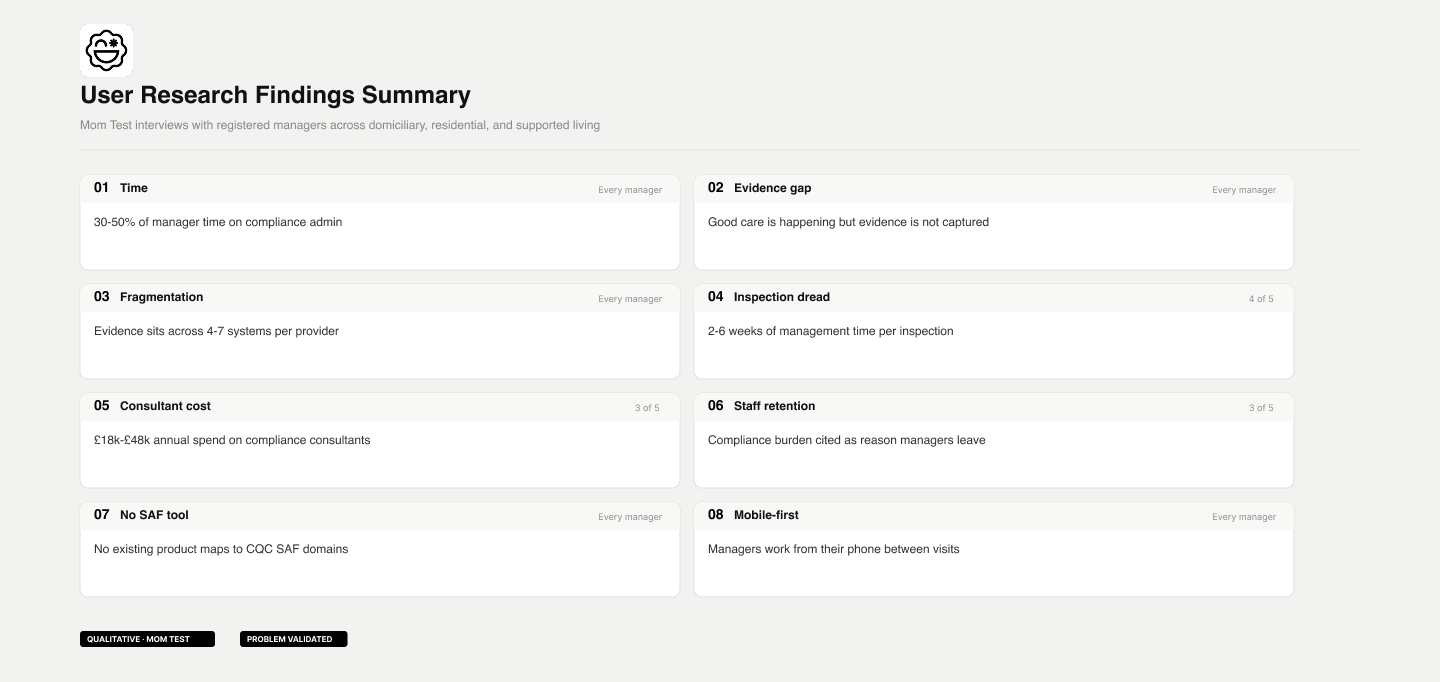
I ran structured conversations with registered managers using Mom Test principles, asking about what they'd actually done and struggled with recently, not what they thought they wanted in a product. I built these into user journey maps covering the full lifecycle of a care package, from referral through to ongoing documentation and inspection.
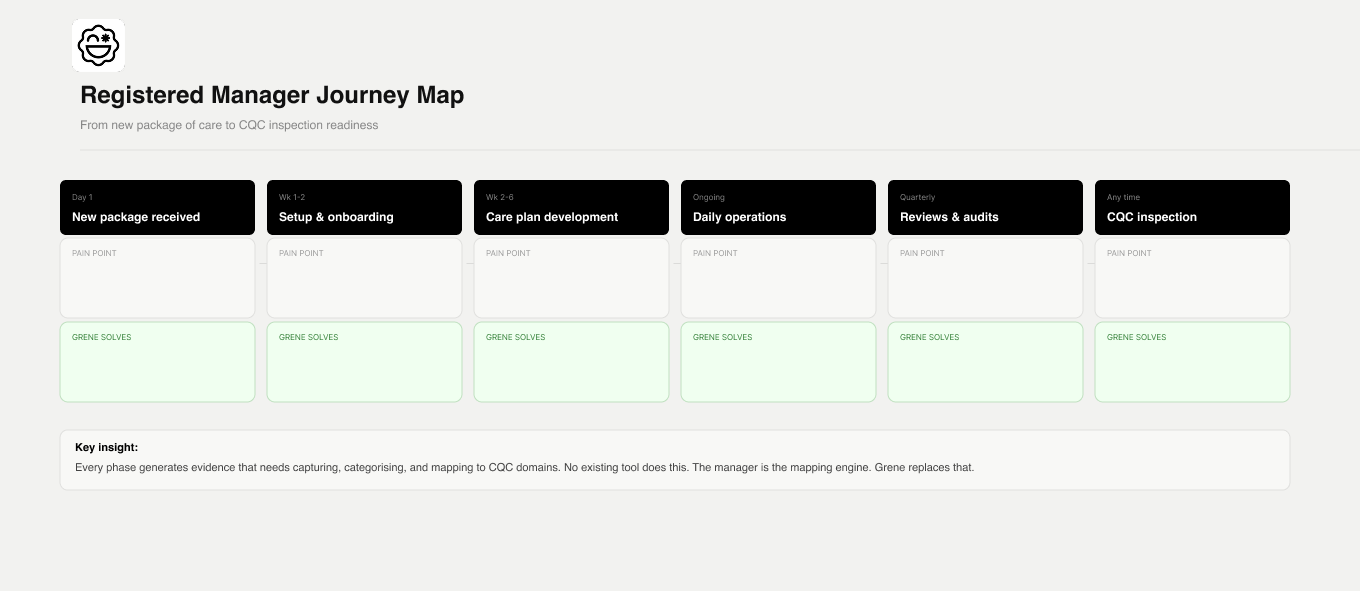
What surfaced wasn't what I'd assumed going in. The blocker to adoption wasn't awareness of digital tools, most managers had tried at least one. It was that existing systems forced services into a rigid, generic format, while many established providers had spent years refining their own paper-based templates, ones that matched how their specific team actually worked. Asking them to abandon that structure for a system's default format was a bigger cost than the time saved.
The design response
That insight reframed the whole approach. Rather than designing a fixed template and asking services to adapt to it, onboarding lets a manager upload the template they already use. Grene reads it and auto-generates both folders, physical-format and digital, structured to match, turning a two-hour manual job into something instant, without forcing anyone to change how they already work.
From there, day-to-day operations get logged through a chat interface, built to sit inside the flow of a manager's actual working day rather than requiring a separate system to log into. Entries update the relevant folders automatically, and Grene keeps a running audit trail ready for inspection. The manager stays firmly in the loop: every automated action is presented for approval, nothing gets filed without a human sign-off.
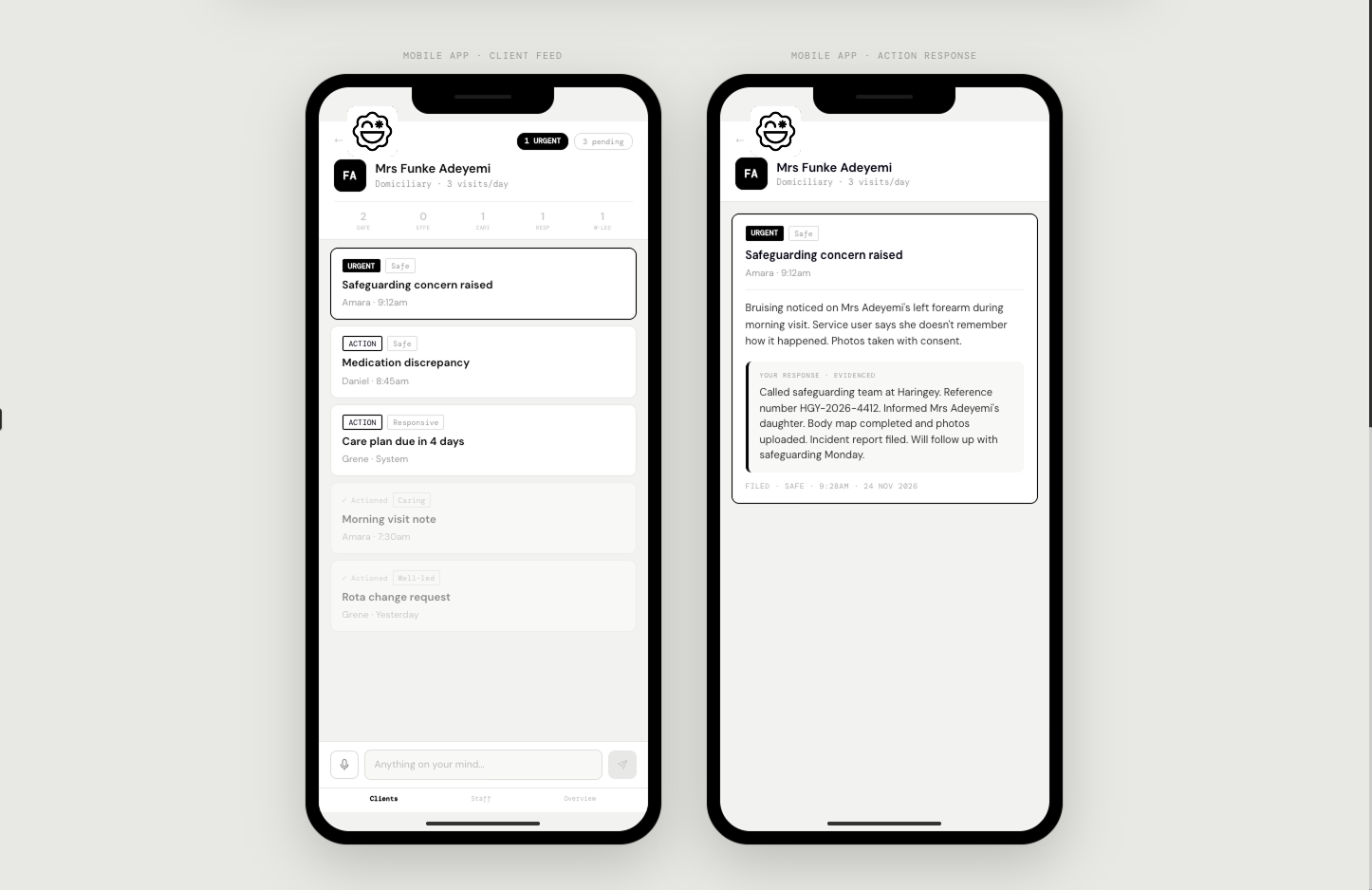
The trade-off here was deliberate. In most SaaS products, a bit of onboarding friction is acceptable, it signals rigour, it lets you gather structured data upfront. In domiciliary care, that logic doesn't hold. These are already resource-stretched teams, and the one thing they don't need is more work up front in exchange for a promise of less work later. So Grene enforces almost no structure of its own during setup, it preserves the manager's original format and adapts around it, rather than asking them to adapt to a new one.
That decision also connects to something broader. Grene sits early in what's being called SaaS 2.0, service as software, where the product doesn't just support the work, it does a meaningful part of it directly. That shift makes the human-in-the-loop principle even more important, not less: the more a system acts on someone's behalf, the more visible and deliberate their approval of each action needs to be. That's why every automated step in Grene, from folder generation to daily logging, surfaces for manager sign-off rather than filing silently.
Validation
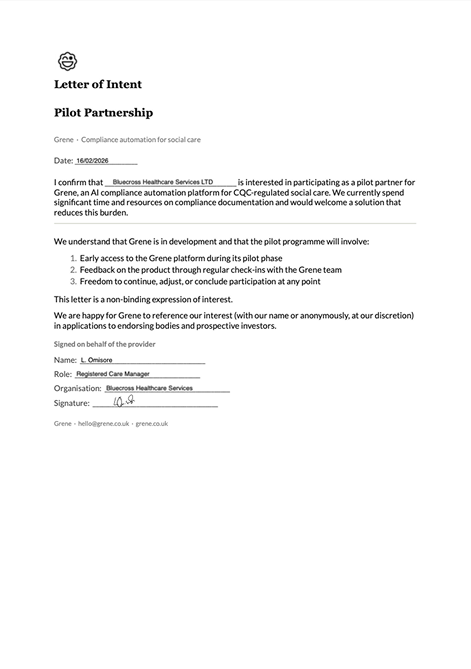
The customisation-first approach was tested directly with managers who'd previously rejected other systems for this exact reason, and it changed the conversation from "we'd have to redo everything" to active interest. That validation led to a signed Letter of Intent to pilot with a CQC Outstanding-rated provider.
What's built
A working MVP as a Next.js and Supabase PWA with a desktop dashboard, built alongside my engineering co-founder. Underneath it sits a full business plan, financial model, and GDPR compliance work, done to support a pre-seed raise and an Innovator Founder visa application.