SwiftABC
Behaviour support data capture, designed and used in my own practice
The problem
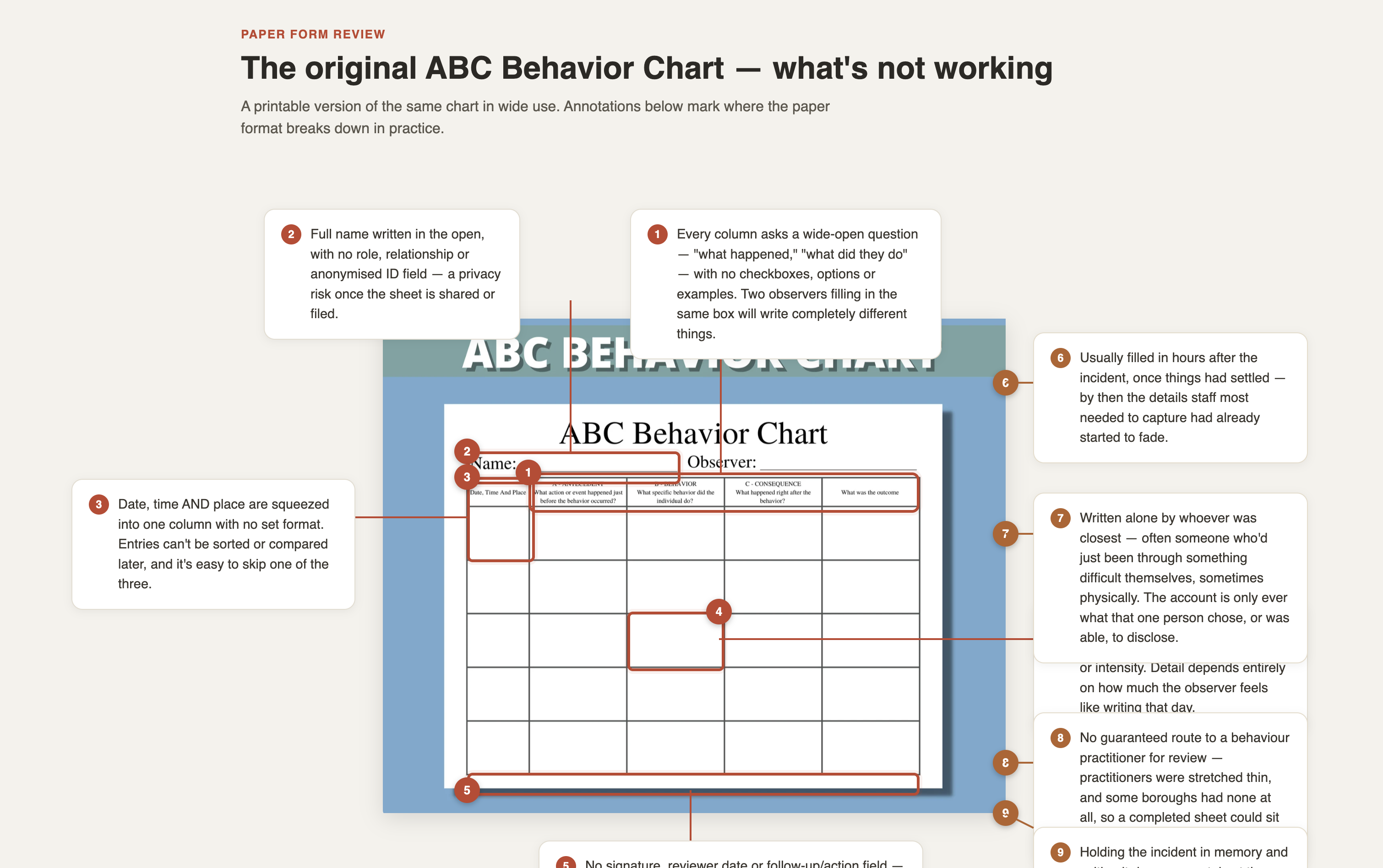
A good Positive Behaviour Support plan depends on the ABC form, Antecedent, Behaviour, Consequence, filled in close to an incident. In practice, the form was usually completed by staff who'd just been through something difficult themselves, sometimes physically, in open text fields or on paper, often hours later. Practitioners were stretched thin, some boroughs had no behaviour practitioner at all, and the data they relied on was filtered through whatever the person recording it chose, or was able, to disclose.
The approach
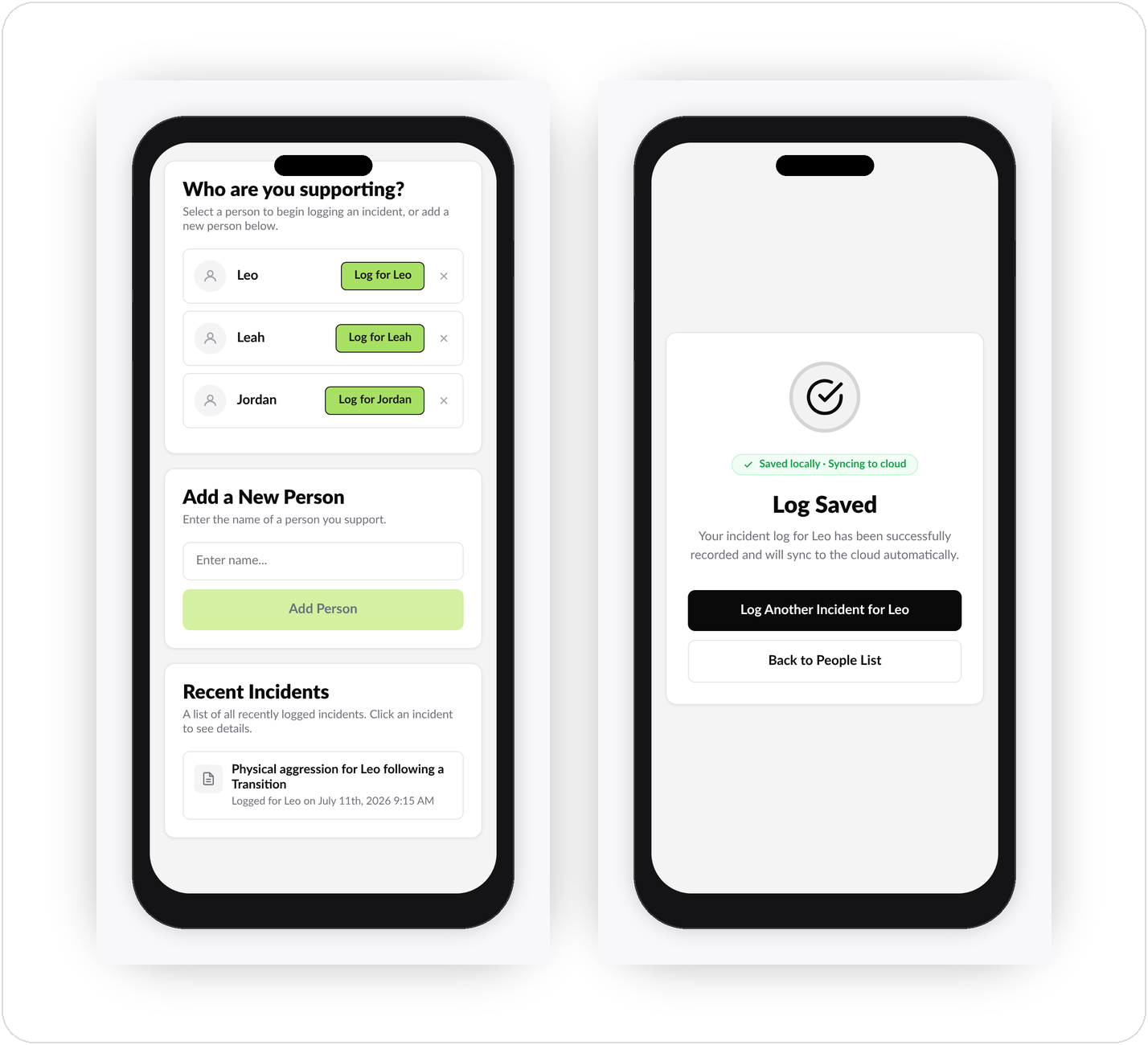
I designed for speed and safety first: how do you get true, usable data out of someone who is exhausted or in crisis, without adding to what they're carrying. The tool went through three stages as the constraints changed.
- Paper, to test the structure of the questions against real incidents
- Google Forms, to get it into staff hands quickly with no training needed
- Tally Forms, for the flexibility and customisation Google Forms couldn't support
Eventually I hit the limits of what no-code tools could do and began building it out properly.
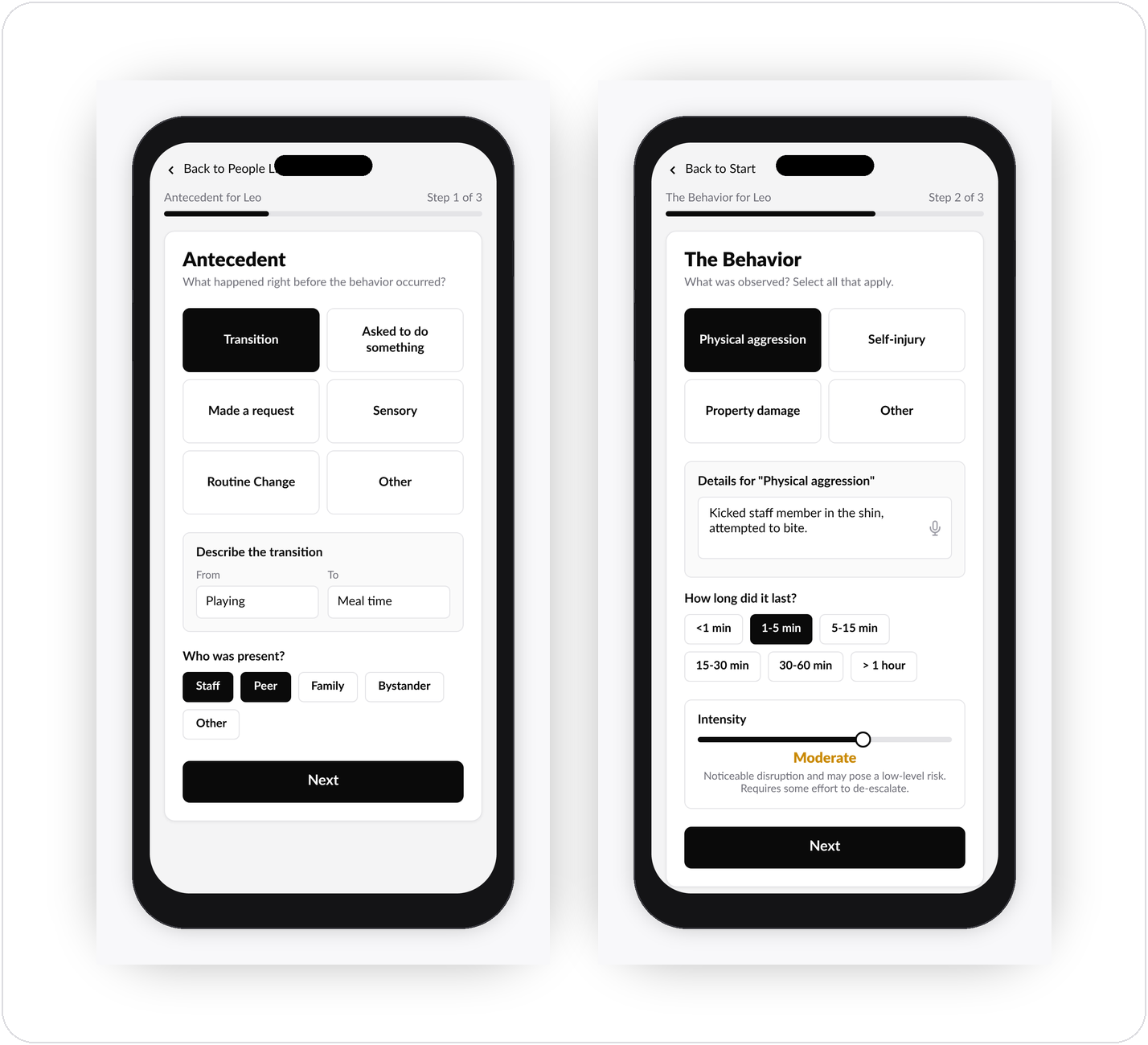
The Antecedent section was the field I rewrote the most. Practitioners need full context of what the individual was doing before an incident to make any real sense of it, but in practice I kept seeing two things: staff writing "nothing happened" because an incident had escalated too fast for them to consciously register what came before it, and even with training, staff struggling to record what they had noticed in purely objective, factual terms rather than interpretation. An open text field was asking people to do real-time behavioural analysis while also managing an incident, which was never realistic. I replaced it with tappable, pre-defined options covering common antecedent categories, which cut the cognitive load of both recall and writing down to a single decision rather than a blank page.
Where it led
SwiftABC was built as an MVP for a wider end-to-end Positive Behaviour Support system I was exploring, one that could support practitioners across the gaps in coverage I kept seeing in the sector. It also surfaced a bigger question that went beyond the form itself: how much of care compliance more broadly could be made this fast, without losing what makes the data trustworthy. That question is what became Grene.